
Bellezza
Find Bellezza around you. A digital tool that opens and promotes Italy’s closed historic sites, tells their stories and connects them in a network: not an abstract app, but a management model already underway in Valle Stura, with Valle Stura Digital Tales.
01The problem: unequal beauty
In 2024 Italy recorded 458.4 million tourist visits, up 2.5% on the previous year, and more than 250 million foreign visitors: the country overtook France to become the European Union’s second tourist destination after Spain. Rome, Florence, Venice and Milan remain the leading destinations, but Naples, Bologna and Verona are also growing. Cultural tourism drives all of this: state museums surpassed 60.8 million visitors (+5.4% on 2023, +11% on 2019), with gross revenue of €382 million. Cultural destinations account for 63.2% of total tourist visits, and for 43.9% of travellers, artistic and monumental heritage is the primary reason for their trip.
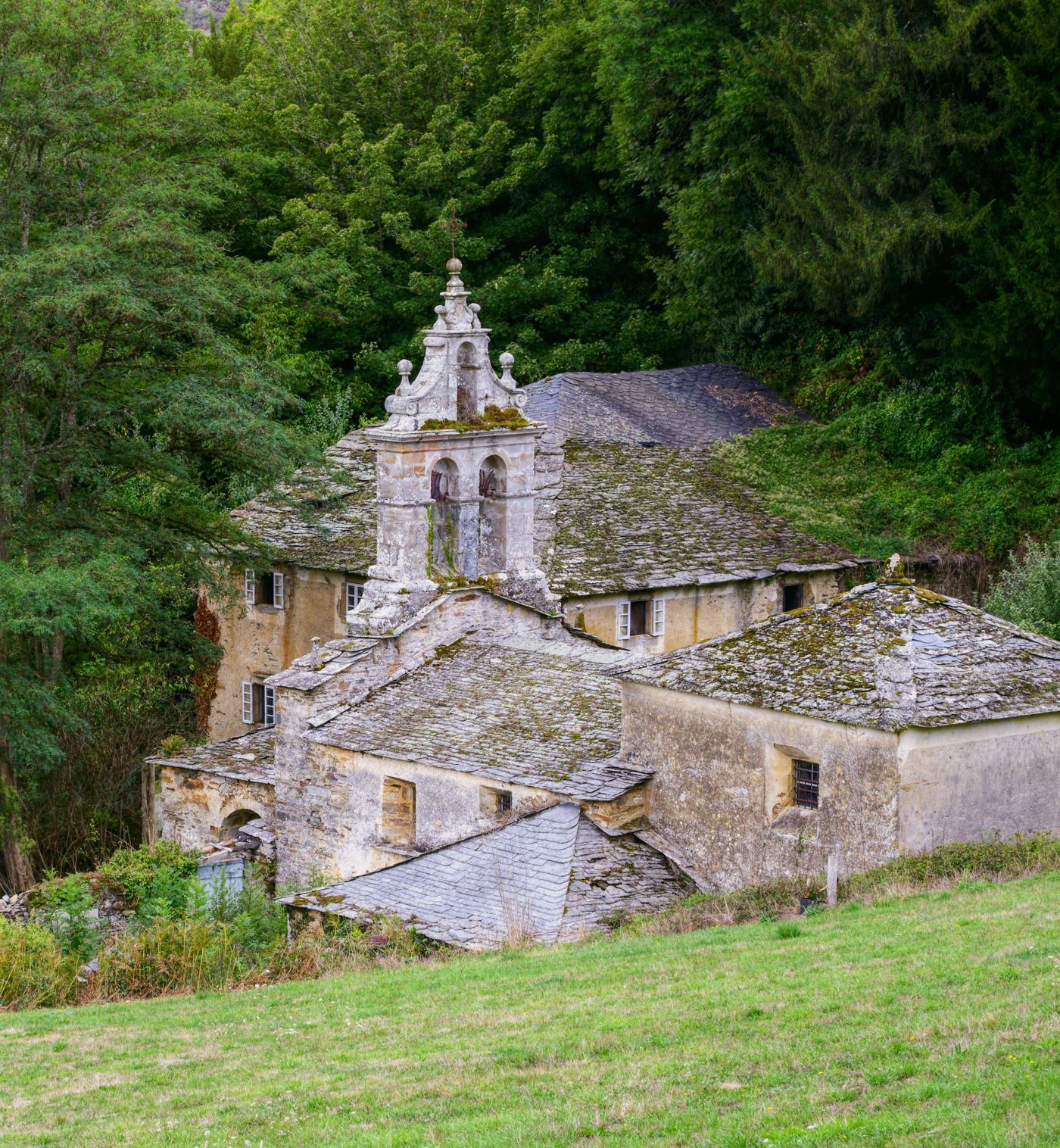
But this growth is concentrated in a handful of major cities, while a huge part of Italy’s heritage remains invisible. According to the latest ISTAT survey, more than 1,000 municipal museums are closed or partially closed, alongside an even larger number of archaeological sites, towers, villas, castles, rural churches and chapels. The cause is not a lack of value, but a lack of funds and staff to open and manage them safely. The result is a structural imbalance: overtourism in the great art cities, neglect in small villages that nonetheless hold historical and artistic heritage of the highest calibre, simply lacking anyone able to tell its story and open it up.
02The answer: the distributed museum
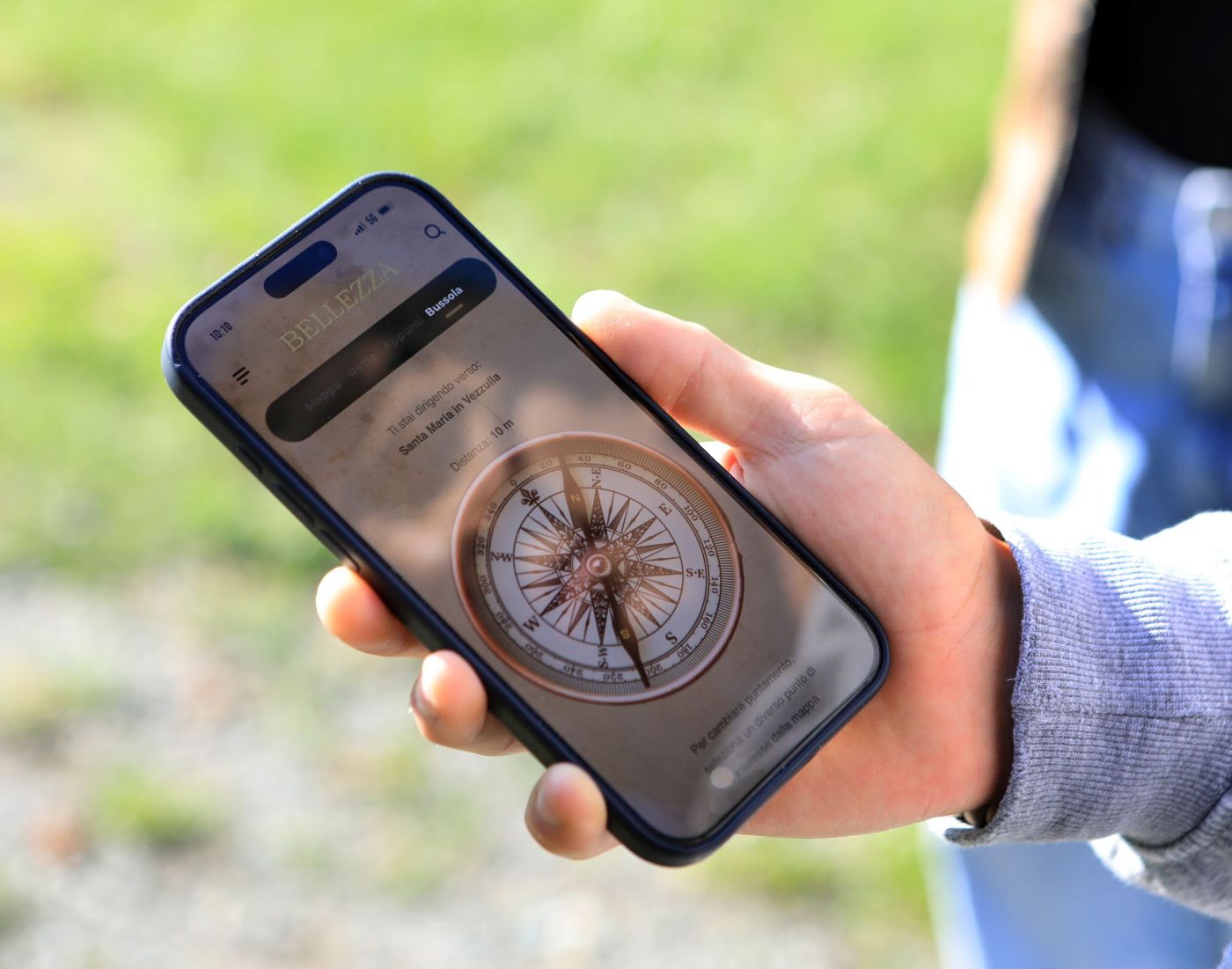
Bellezza is the digital tool Renovatio designs and manages to open closed sites and connect them into a distributed museum: a system of places — historical, artistic, natural, experiential — that visitors discover independently, guided by the app, free to choose their own route and confident in a structure that monitors, tracks and generates data on every visit.
It is neither a digital catalogue nor a tourist guide: it is a management model that weaves together storytelling, technology and the physical opening of places. The interface is built like a travel diary, to recapture the sense of discovery and adventure that visiting an abandoned site can still offer — without giving up the safety, traceability and economic sustainability that managing a cultural asset requires.
Scroll sideways
03How it works for municipalities
1. Design. We study the concept of the distributed museum: identifying which sites can be opened, each one’s potential, and the routes connecting them.
2. Installation. We equip sites with smart-building tools — electronic locks, video surveillance — and handle the bureaucratic requirements needed to open them. All that’s needed is a power connection and GSM network coverage.
3. Local network. We involve local businesses — accommodation, catering, guides, crafts — to build products and services aligned with the project.
4. Promotion. We promote the new network of open sites to attract visitors, turning it into a lever for local marketing.
04How it works for visitors
1. Buying the ticket. Visitors buy the ticket for themselves and their companions in the app.
2. Access code. The ticket generates a unique code that unlocks the site’s door.
3. Safety and traceability. A named ticket and electronic payment verify the identity of each visitor, increasing safety and traceability of access.
4. Free visit. An exclusive, barrier-free experience at your own pace — with no fixed hours or mandatory guides.
05Safety, data, value
Self-guided doesn’t mean unsupervised: 24-hour video surveillance, entry conditional on electronic ticket purchase, and a digital log of opening and closing times make every site safer than under traditional management. The same infrastructure generates valuable data: visitor flows, dwell times, most requested experiences, and the strengths and weaknesses of each site. A management dashboard lets municipalities schedule special openings for events, and the contacts gathered — with consent — feed further local promotion efforts.
Every point of interest, whether already open or yet to open, is told through cinematic video content and aerial footage, in multiple languages, with the historical and scientific rigour guaranteed by collaboration with academic partners such as Sapienza University of Rome and the University of Campania “Luigi Vanvitelli”. Quality tourist flows, directed towards organised, always-open sites, generate value across the whole area: ticket sales produce revenue shared with local administrations, and opening the sites prevents neglect, benefiting tourists and residents alike.
06Valle Stura Digital Tales: the first pilot site
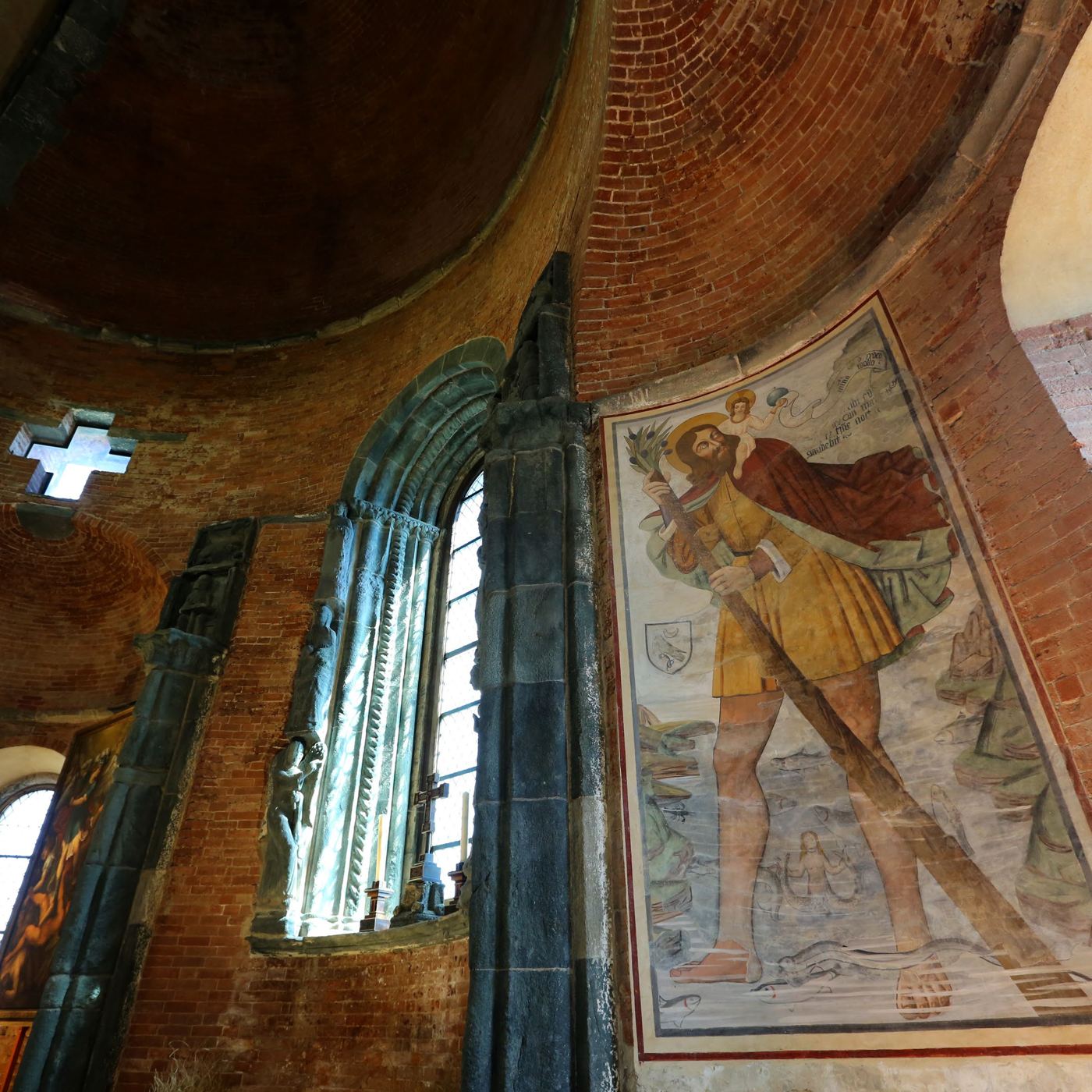
Bellezza’s pilot project didn’t start as a hypothesis, but as a real, already-underway initiative: Valle Stura Digital Tales (CUP D38I23000260001), launched on 4 June 2024 in the territory of the Unione Sol — Valle Stura, Orba and Leira — across the municipalities of Masone, Campo Ligure, Rossiglione, Mele and Tiglieto. An area marked by depopulation, closed businesses, landslides and floods, but with historical and artistic heritage of a high calibre that, until now, had no one able to tell its story: the Andrea Tubino Museum, the Sacrario dei Martiri del Turchino, the Badia di Tiglieto, the Sanctuary of Acquasanta in Mele, the Church of Santa Maria in Vezzulla in Masone.
The project has already reached an agreement with the Parish for the management of the Cappella della Maddalena and with the Confraternity of Santa Caterina in Rossiglione; technical surveys for the hardware needed for opening and monitoring have been completed, and testing of the various components is underway ahead of physical installation. Video and photographic content has been filmed and is being edited. Project partners include, among others, the Municipality of Campo Ligure, the Municipality of Masone and the Municipality of Genoa, as part of a CTE grant for urban-environment experimentation.
07Three areas, three models
Economic studies conducted on the three pilot areas — based on ISTAT data on museum visits recorded in 2019 — estimate the platform’s impact over a two-year horizon, at an average ticket price of €5.
«There’s an entire continent that needs our Bellezza.»
The model is scalable across Europe: the same gap between saturated major cities and closed heritage runs through every country shaped by Western civilisation.